
US e-commerce giant Amazon has written to the independent directors of Future Retail Limited (FRL), including Gagan Singh, Ravindra Dhariwal and Jacob Mathew, and its audit committee, providing data and alleging that there have been significant financial irregularities to the prejudice of public shareholders, banks, creditors, and third-party suppliers. Amazon has said this warrants a thorough and independent examination of all relevant facts and related-party transactions, including of past financial years, by an independent agency. Separately, Amazon has written to Securities and Exchange Board of India Chairman Ajay Tyagi, seeking the withdrawal of the regulator's conditional approval granted to FRL related to the merger deal between the Future group and Reliance.


The IPO filing-to-approval lapsing ratio this year is the best in three years, underscoring the improvement in the IPO market's buoyancy.

Among the 30 Sensex firms, HCL Technologies, NTPC, Bajaj Finserv, Tech Mahindra, JSW Steel, Titan, Mahindra & Mahindra, Tata Steel, Larsen & Toubro and Tata Consultancy Services were the biggest gainers. Kotak Mahindra Bank, IndusInd Bank, Maruti and Hindustan Unilever were among the laggards.

The country, last year, stood at the 27th spot for effective regulation and supervision of securities exchanges.

IT and interest rate-sensitive bank, realty, and auto stocks ended with sharp gains.

State-run Bank of Baroda and Oriental Bank of Commerce are among those facing scrutiny.
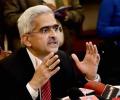
Reserve Bank Governor Shaktikanta Das on Monday said despite the latest headwinds arising from the Jackson Hole summit leading to extreme volatility, our banking system and financial markets are strong enough to withstand such pressures. Taking the markets by surprise, US Fed chair Jerome Powell had told the annual Jackson Hole summit of central bankers and economists last week that he would have to keep raising federal fund rates to tame inflation, which remains the biggest challenge to the world's largest economy. He also warned of the pains that such monetary policy actions would create on growth and jobs.
The rumour verification process would now be triggered by changes in price or 'material price movements', as the paper defines it. What this means is that companies would need to verify rumours only if the share price moves significantly.

Several exchanges are facing a cash crunch with committed investment not coming from venture capital funds and trading activity seeing a sharp decline, reports Rajesh Bhayani.

From the 30 Sensex firms, Power Grid, ICICI Bank, Bharti Airtel, HDFC Bank, Kotak Mahindra Bank, Larsen & Toubro, Adani Ports and UltraTech Cement were among the laggards. Sun Pharma, Reliance Industries, Titan, HCL Technologies and Bajaj Finserv were among the biggest gainers.

The index is currently trading at 149 per cent of its historical P/B valuation, surpassing its previous peak of 125 per cent made in 2020-21.

The ideal time to invest in sector funds, is during a downturn so that investors can capitalise on a turnaround in 1.5 to 2 years.

Retail investors now own a bigger slice of smallcap companies than at the start of 2023-24 (FY24), underscoring their growing conviction about investing in this red-hot space. Data from Capitaline shows mutual funds' (MFs') average holding in the National Stock Exchange Nifty Smallcap 250 rising to 9.26 per cent from 8.67 per cent during the first six months of FY24, with the number of companies with over 20 per cent MF holdings increasing from 24 to 28. In comparison, MF holdings in Nifty50 companies have gone up only marginally, from 9.67 per cent to 9.75 per cent.

The India growth story is still intact, and fall in the Indian stock markets is an imported one and if the government succeeds in legislating the GST and Land Bill, India could yet emerge as a winner believe stock market experts

Dr Reddy's Laboratories (DRL) share price plunged 6.66 per cent to Rs 1,203.50 per share on the NSE during Friday after analysts remained cautious on the company's Q3 performance and differed on its growth outlook. DRL's Q3 performance was viewed as subdued by some analysts when they adjusted it for one-time grants and incomes that the company received during the quarter.

Government-owned companies are more generous in rewarding their shareholders with dividends.

At the outset, decide whether you want to be a trader or an investor, suggest Sarbajeet K Sen and Sanjay Kumar Singh.

'Despite the current uncertainties, the long-term outlook remains constructive due to strong fundamentals, government initiatives, and a stable banking sector.'

IPOs inherently carry more risks than stocks that have been listed on the exchanges for some time.

'Like all long-term bull markets, the Indian stock market will continue to climb the proverbial wall of worry.'

State Bank of India, Adani Ports, Tata Consultancy Services, ICICI Bank, Reliance Industries and PowerGrid were also among the laggards.

'It's advisable not to go overboard on a banking sector fund or any other sector fund.'
Days before B Ramalinga Raju admitted to fraud, a handful of financial services companies, including DSP Merrill Lynch, IL&FS Financial Services and Deutsche Bank's non-banking finance company, sold Satyam Computer Services shares pledged with them.

The Securities and Exchange Board of India (Sebi) on Thursday debarred Pacheli Industrial Finance and six others entities from the markets in its bid to crack down on a "pump and dump" case, substantiated by a probe into Rs 850 crore preferential allotment and examination of alerts around price movement of the firm's stock.

'Investors with a long-term investment horizon and the risk appetite for fluctuations in property values may find SM Reits a viable option.'

Equity benchmark index Sensex buckled under selling pressure for the second straight session to close below the 65k mark on Friday, as investors offloaded IT, teck and metal stocks amid a bearish global trend. Besides, fresh foreign fund outflows also hit investor sentiments, traders said. In a volatile trade, the 30-share BSE Sensex declined 202.36 points or 0.31 per cent to settle at 64,948.66.

For equity investors, the risk-to-reward ratio is worsening.

Adani group opened a $1.2 billion copper plant, bought a port in Odisha, raised stakes in a cement company and stitched an alliance with rival Mukesh Ambani's Reliance Industries, all in a matter of one week in signs that the apples-to-airport conglomerate has shrugged off the Hindenburg effect and is back to rapid expansion spree. In the last one week, Adani group has through regulatory filings and press statements announced expansions and investments in its mainstay ports business, diversification into metal refining, fund infusion into a two-year-old cement foray and continuing progress in the commissioning of its mega solar project.

Congestion on Mumbai roads has become chronic.

'Value index funds are most appropriate for long-term investors who can withstand deeper drawdowns.'

Tata Motors reported a consolidated net profit of Rs 17,483 crore (adjusted for exceptional gains and losses) for Q4FY24, surpassing TCS' consolidated net earnings of Rs 12,434 crore. For the automotive major, this marked a 213.7 per cent year-on-year increase in the bottom line, from Rs 5,573.8 crore a year ago. In contrast, India's biggest IT firm saw a more modest Y-o-Y growth of 9.1 per cent in net profit, from Rs 11,392 crore.

Only 10 per cent of stocks account for 93 per cent of investments.
Rising outgo towards clearing and settlement fees has led to an altercation between the BSE and the National Stock Exchange of India (NSE), with the latter striking down the former's request to lower the charges. NSE said it has no plans to restructure the same and that it will continue with the pricing defined under the interoperability framework. The interoperability framework, introduced in 2019, allows trades executed on any of the exchanges to be settled or cleared at either of the two clearing corporations -- NSE Clearing (NCL) or Indian Clearing Corporation (ICCL), fully-owned by the NSE and the BSE, respectively.

While Nifty 50 reflects changes in 40 years, it also shows what is missing: Low-cost manufacturers at one end, and deep-value players at the other. Also missing are technology players, observes T N Ninan.

After a volatile session, Sensex closed the day 563 points lower

The bulk of of trading on stock markets is done algorithmically, by computerised clerks working at the behest of human traders.

From the Sensex pack, Power Grid, HDFC Bank, HDFC, Tech Mahindra, Tata Consultancy Services, Wipro, Reliance Industries and Larsen & Toubro were the major gainers. Mahindra & Mahindra, ITC, IndusInd Bank, Axis Bank, Bajaj Finance and Maruti were among the laggards.
Sebi has also asked the stock exchanges to set up a separate monitoring cell with identified personnel to ensure compliance with the new norms.

The Asian life assurance business of AIG, is expected to set a price range for its initial public offering early next week and hopes to strike agreements with big 'cornerstone' investors who could take one-fifth of the shares sold a few days after that, the report said citing sources.
